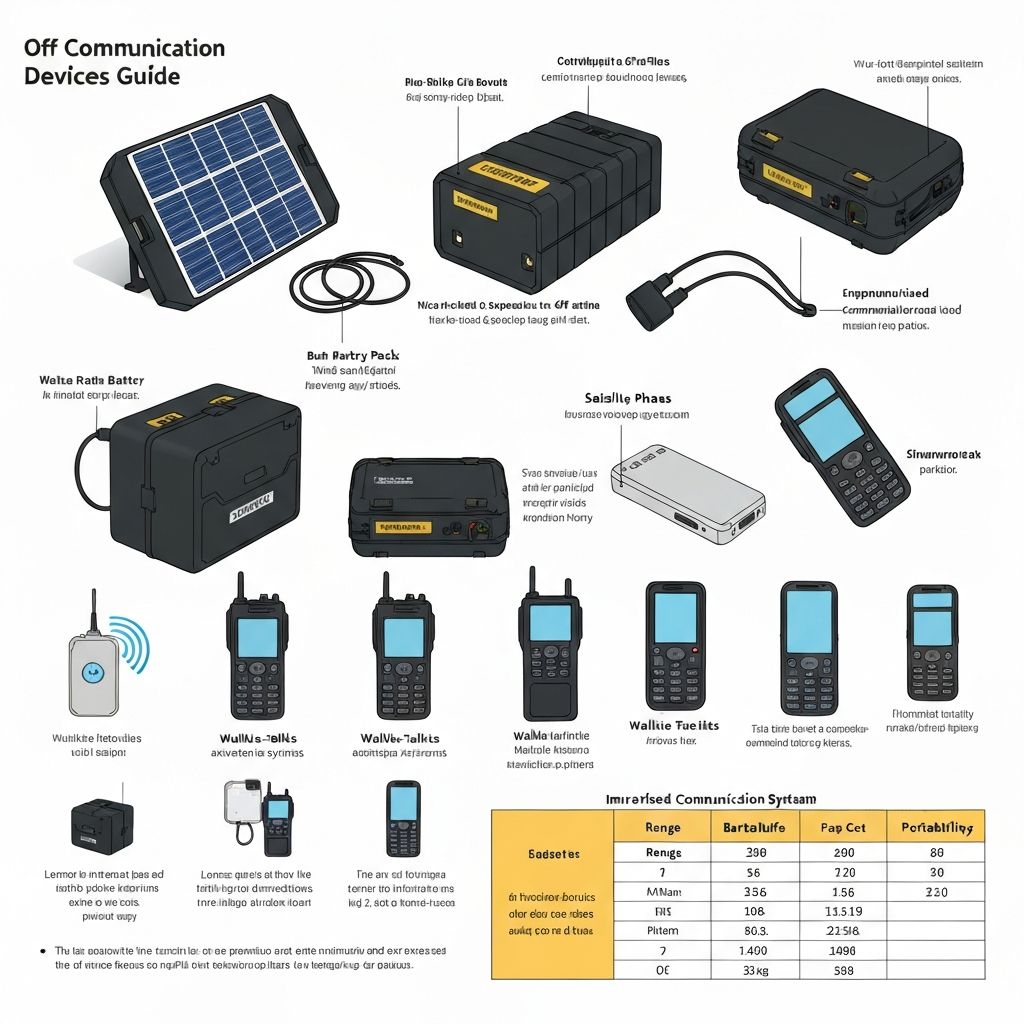
Going off-grid doesn't mean going silent. Here's everything you need to know about staying connected in the wilderness, from traditional options to the latest technology.
Why Off-Grid Communication Matters
Every year, thousands of outdoor enthusiasts find themselves in situations where communication could save lives. A twisted ankle 10 miles from the trailhead. A group that got separated in bad weather. An unexpected storm rolling in.
The right communication tool isn't just convenient—it's essential safety equipment.
Option 1: Two-Way Radios (FRS/GMRS)
Traditional walkie-talkies remain popular for good reason: they're affordable, simple, and require no subscription.
Pros:
- Low cost ($20-100 for a pair)
- No learning curve
- Instant voice communication
Cons:
- Limited range (0.5-2 miles in most terrain)
- Line-of-sight only
- No messaging or location features
- Poor battery life
Option 2: Satellite Messengers
Devices like Garmin inReach and SPOT use satellite networks for global coverage.
Pros:
- Works anywhere on Earth
- SOS emergency features
- Two-way texting
Cons:
- Expensive devices ($300-600)
- Monthly subscriptions required ($15-65/month)
- Slow message delivery
- No group communication
Option 3: LoRa Mesh Devices
The newest category, including Biiper, uses mesh networking for group communication.
Pros:
- No subscriptions ever
- Multi-mile range that extends with each device
- Group messaging and location sharing
- Days of battery life
Cons:
- Requires at least 2 devices
- Range depends on terrain
- Not global (range-limited)
Which One Should You Choose?
It depends on your use case:
- Day hikes with your partner: Basic FRS radios work fine
- Solo backcountry travel: Satellite messenger for SOS capability
- Group adventures: LoRa mesh devices like Biiper
- Maximum safety: Biiper + satellite messenger combo
Our Recommendation
For most groups heading into the backcountry, a LoRa mesh device provides the best balance of features, cost, and reliability. You get real-time group communication without ongoing costs, and the mesh network provides redundancy that single-point devices can't match.